
Woman Guilty Of ChatGPT Rape Hoax
Floridian gave cops AI image of purported home invader

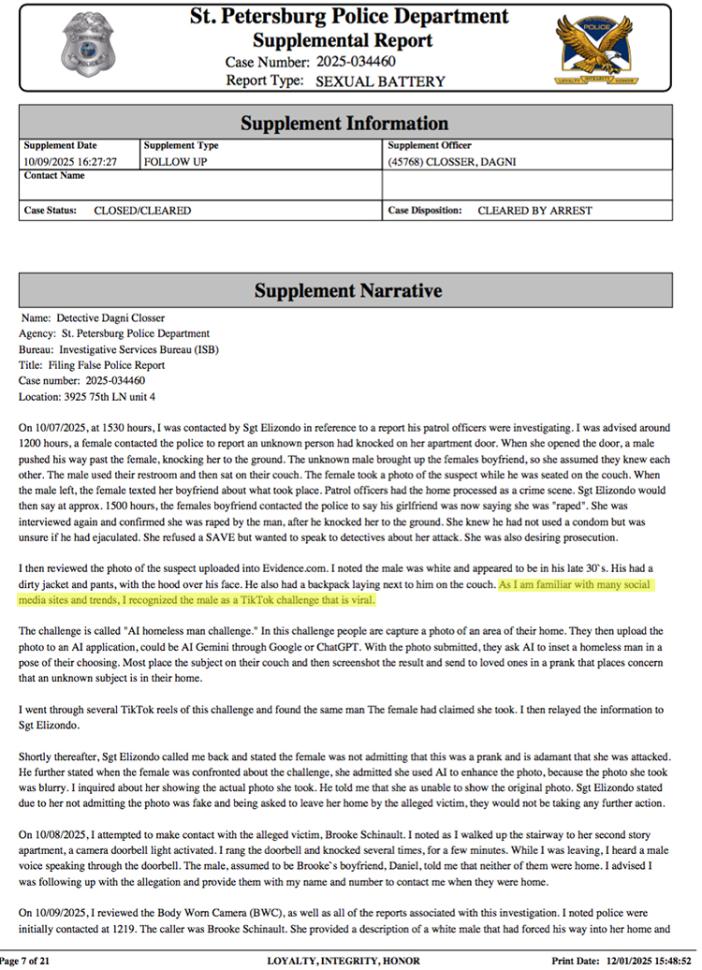
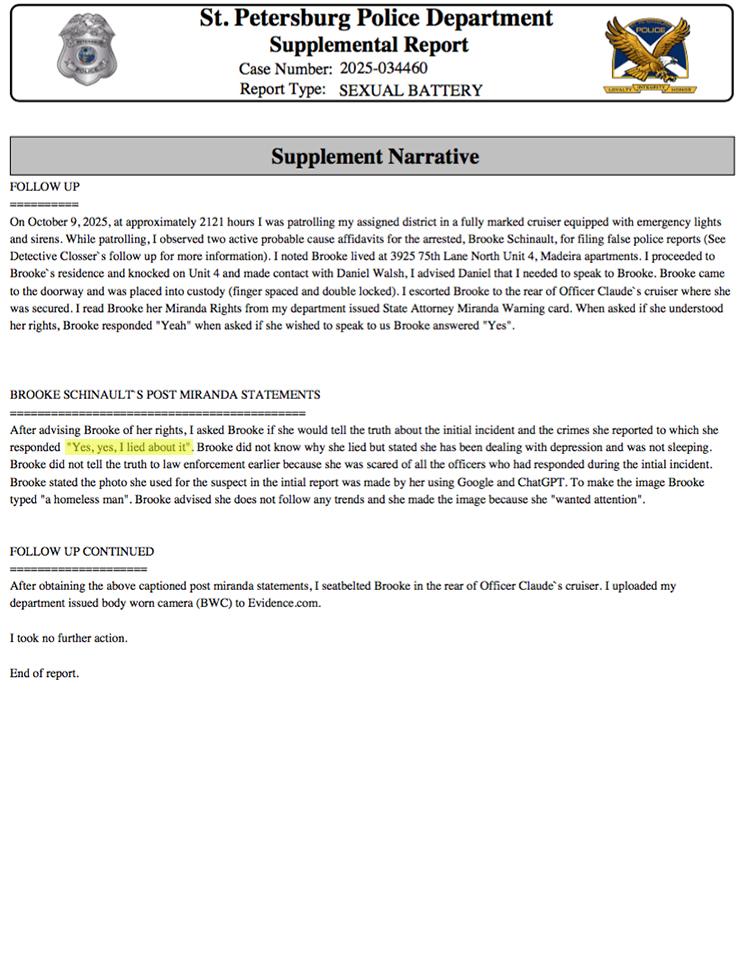
DECEMBER 2--The Florida Woman who gave police an AI-generated photo of a homeless man who purportedly barged into her residence and raped her has been convicted of falsely reporting a crime, a sham  prompted by a “TikTok challenge” and her desire for attention, records show.
Brooke Schinault, 32, yesterday pleaded no contest to the hoax and was adjudged guilty of the misdemeanor. She was fined and placed on probation.
In October, Schinault called 911 to report that a male intruder forced his way into her St. Petersburg apartment and committed the sexual assault while her infant slept in another room. Seen at right, Schinault claimed to have taken a photo of the man while he sat on her sofa.
The reported burglary/battery prompted a police response that included seven officers, a detective, six rescue personnel, and a forensic technician who gathered DNA samples.
Schinault’s story fell apart when Det. Dagni Closser examined the photo of the purported suspect, a hoodie-wearing white male in his 30s. “As I am familiar with many social media sites and trends, I recognized the male as a TikTok challenge that is viral,” Closser reported. The “AI homeless man challenge,” Closser noted, involved the uploading of a residential photo to an AI application, which then inserts a photo of a homeless man into the image.
“Most place the subject on their couch and then screenshot the result and send to loved ones in a prank that places concern that an unknown subject is in their home,” said Closser, who reported finding “several TikTok reels of this challenge” that used the same photo of the homeless man.
Confronted by police, Schinault initially claimed she only used AI to sharpen a blurry photo of her attacker. She eventually confessed, saying that she was dealing with depression, was not sleeping, and “wanted attention.”
The hoax image, Schinault said, was made by using “Google and ChatGPT.” To create the photo, cops reported, “Brooke typed ‘a homeless man.’” (2 pages)
Featured
